

If you’re searching for how to test a load cell, it’s probably because your scale is drifting, failing verification, or giving intermittent faults. While a quick DIY check might seem tempting, load cells are precision transducers—and incorrect handling can damage equipment, compromise traceability, and void warranties.
Here’s why professional testing is essential, what it includes, and the safe on-site checks you can do before calling SWIA.
Why DIY Load Cell Testing Falls Short
Load cells convert force into tiny millivolt-level signals. Even small errors can cause major problems:
- Accuracy risk: Using improvised weights, uneven loading, or electrical noise can hide the real fault.
- Traceability gap: Legal-for-trade and audit requirements demand calibrated test masses and documented procedures. DIY checks don’t meet these standards.
- Safety and damage: Misapplied loads, side loads, or over-tightening can permanently deform cells or compromise mounts.
- Misdiagnosis: Symptoms may stem from cabling, junction boxes, indicators, filters, or mechanical issues—not the load cell itself. Swapping parts blindly is costly.
What Professional Load Cell Testing Includes
When you book SWIA, our experts follow a methodical, standards-aligned process tailored to your system:
1. Visual & Mechanical Inspection
We check orientation, corrosion, and interference. Load buttons, base plates, mounts, stay rods, bearings, and anti-rotation hardware are inspected for alignment and binding.
2. Electrical Integrity Checks
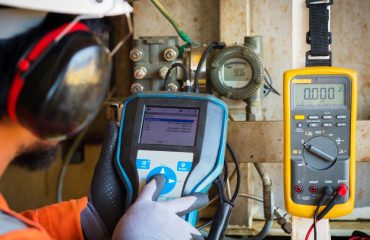
Using calibrated meters, we test bridge resistance, input/output resistance, and insulation resistance to earth. Out-of-spec readings reveal internal damage, moisture ingress, or wiring faults.
3. Signal & Span Verification
Certified test masses and a stable indicator allow us to confirm zero, span, and linearity. We also test repeatability and hysteresis under multiple loads.
4. Corner & Eccentric Load Tests (Platform Scales)
For multi-cell platforms, each corner is tested for even response. Significant corner errors often indicate cell, cabling, or summing-card issues—not calibration alone.
5. Environmental & Interference Assessment
We identify ground loops, vibration, temperature swings, power fluctuations, and moisture pathways that affect scale stability.
6. Adjustment, Sealing & Documentation
After adjustments, repairs, or resealing, we provide a detailed report. For trade applications, we can conduct Legal-For-Trade Verification once all requirements are met.
Common Load Cell Symptoms—and What They Really Mean
- Drift or slow creep: Often caused by moisture, temperature changes, mechanical creep, or filtering—not cell failure.
- Jumpy readings: Could be loose connections, cable damage, electrical noise, vibration, or unstable power.
- Non-linearity (accurate at low weight, poor at high): Overload history, incorrect span, or mounting interference.
- Corner error on platforms: Usually load cell mismatch, damaged junction card, or unequal preload—not solved by more calibration.
Safe On-Site Checks Before You Call SWIA
Quick checks can help without risking damage:
- Clean & clear: Remove debris under platforms and around stops.
- Inspect cables: Look for cuts, crushing, moisture ingress, and stressed glands.
- Check level & hardware: Ensure the scale is level and bolts are snug (not over-tight).
- Note power & environment: Identify recent electrical work, storms, or process changes.
- Basic functional check: Place a certified test weight centrally once, record zero, loaded, and post-load readings. Avoid improvised items and corner loading.
If results are inconsistent, stop there—further DIY adjustments may hide the real issue.
Why Certified Load Cell Testing Matters
When audits or customers ask for evidence, “it looked right on the day” is not enough. SWIA’s installation, maintenance, calibration, and verification services use calibrated test pieces and documented procedures, giving you:
- Traceable, reliable results
- Faster root-cause analysis
- Clear pass/fail criteria for compliance
- Confidence that load cell, indicator, and mechanics work together
Repair vs. Replacement
Not every fault requires a new load cell. Many issues stem from connectors, junction boxes, summing cards, or mounts. Our approach isolates the true cause first, then recommends the most economical solution—repair, component replacement, or recalibration—saving time and cost while protecting uptime.
The SWIA Difference
Since 1979, Sensortronic Weighing & Inspection Australasia (SWIA) has delivered industry-leading solutions in mass measurement, product inspection, calibration, and Legal-For-Trade Verification. We service everything from single instruments to complex, multi-cell systems in demanding environments.
Don’t Guess—Test Professionally
Avoid damaging equipment or invalidating traceability. Book a professional load cell assessment with SWIA to diagnose faults, calibrate with traceable standards, and receive audit-ready documentation—so your line stays accurate, compliant, and running.
Contact SWIA today for load cell testing, calibration, and verification you can trust.