

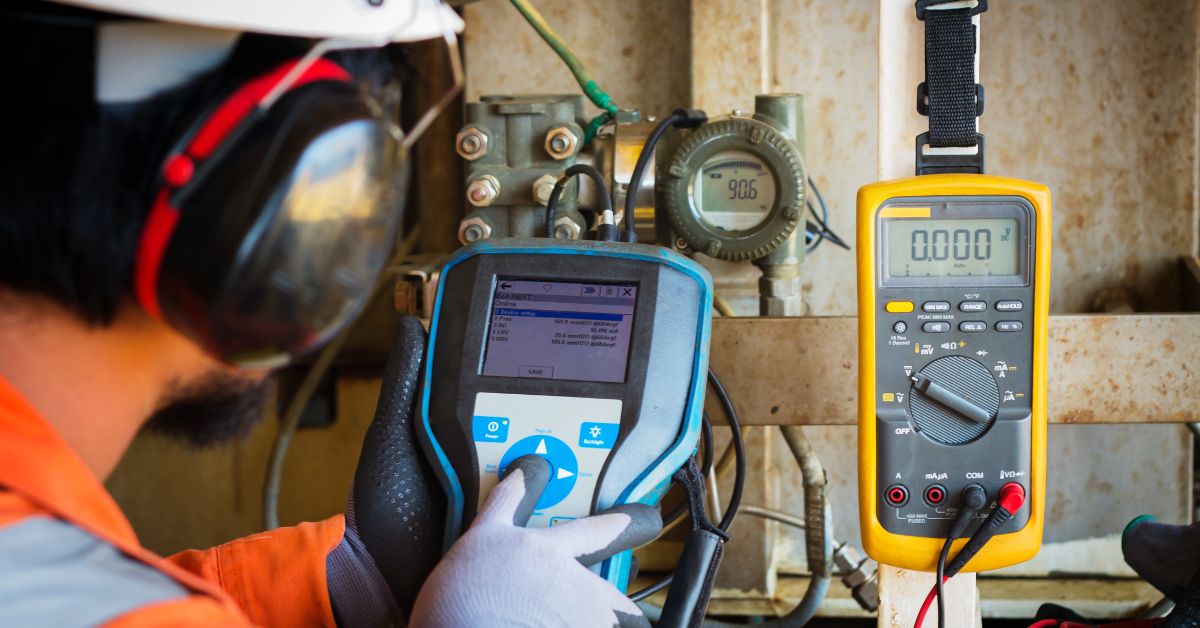
Precision matters in every industry, and accurate measurements form the backbone of reliable operations across Australia’s diverse industrial sectors. Equipment calibration—the process of verifying measuring devices against known standards—ensures that businesses can trust their data when making critical decisions. From waste management facilities operating weighbridges to mining operations that depend on belt weighers and agricultural businesses weighing livestock to manufacturing facilities conducting quality control, calibration maintains the integrity of measurements that directly impact profitability, safety, and compliance.
When equipment lacks proper calibration, readings can gradually drift away from true values, creating a cascade of problems that can cost businesses significantly more than preventative maintenance would. Understanding why is calibrating equipment important becomes clear when considering the potential consequences: revenue losses from inaccurate weighing, safety hazards from faulty load measurements, regulatory penalties for non-compliance, and damaged customer relationships due to disputed measurements.
At Sensortronic Weighing and Inspection Australasia (SWIA), we’ve witnessed how proper calibration programs protect operations while extending equipment lifespan and delivering measurable returns on investment. With over 40 years of industry experience and NMI licenced credentials, we understand that calibration isn’t just a maintenance task—it’s a strategic investment in operational excellence. This article explores the calibration process, examines the risks of neglect, and provides practical guidance for implementing effective calibration schedules that protect your business while ensuring measurement accuracy across all operations.
What Is Equipment Calibration?
Equipment calibration involves systematically comparing a measuring device’s output against certified reference standards to verify accuracy and identify any deviations from expected performance. This verification process establishes an unbroken chain of traceability back to national measurement standards maintained by Australia’s National Measurement Institute, providing confidence that measurements align with international reference standards.
The calibration process follows a structured approach that begins with thorough preparation and environmental control. Our certified technicians examine the equipment under controlled conditions, comparing its readings against certified reference standards at multiple measurement points. This comprehensive testing reveals whether the device operates within acceptable tolerance levels or requires adjustment to restore accuracy. Documentation plays a crucial role, as each calibration generates detailed certificates recording the equipment’s performance, any adjustments made, and the measurement uncertainty associated with the calibration.
Weighing equipment calibration requires particular attention to testing across the full operational range using certified test weights. Rather than checking accuracy at just one point, technicians verify performance at various loads to ensure consistent accuracy throughout the scale’s capacity. This multi-point approach identifies non-linear errors that might affect specific weight ranges while missing others.
For legal-for-trade applications in Australia, calibration testing must meet strict NMI requirements that govern measurement tolerances and documentation standards. These regulations ensure that calibrated equipment provides legally defensible measurements for commercial transactions. The calibration test report and verification certificate serves as proof of compliance, demonstrating that the equipment meets regulatory standards and can be trusted for business-critical measurements.
Understanding why calibrating equipment is important begins with recognising that calibration is primarily a verification process rather than simply an adjustment procedure. While adjustments may follow calibration if deviations are found, the core purpose involves documenting the equipment’s current performance relative to known standards, providing the foundation for confident decision-making in measurement-dependent operations.
The Consequences of Neglecting Calibration
Businesses that postpone or skip regular calibration face mounting risks that can significantly impact their financial performance and operational integrity. These consequences extend far beyond simple measurement errors, affecting virtually every aspect of business operations in ways that are often more costly than implementing proper calibration schedules.
Financial losses represent one of the most immediate consequences of uncalibrated equipment. Even small systematic errors can translate into substantial annual losses when multiplied across thousands of measurements. A waste management facility operating an uncalibrated weighbridge might consistently undercharge customers by small amounts, creating revenue losses that accumulate over time and affect the integrity of regulatory reporting to Department of Environment and Resource Manager (DERM). Manufacturing operations experience similar issues when uncalibrated scales lead to product giveaway—additional product not accounted for due to inaccurate measurements. Industry data suggests that uncalibrated weighing equipment typically costs businesses 2-5 times more in errors and waste than they would spend on regular calibration services.
Regulatory compliance violations pose serious risks in Australia’s strictly regulated measurement environment. The National Measurement Institute enforces stringent requirements for legal-for-trade applications, and operating with uncalibrated equipment can result in substantial fines, penalties, or operational shutdowns. During regulatory audits, the absence of current calibration certificates immediately raises compliance concerns, potentially triggering more extensive investigations and additional scrutiny.
Safety hazards emerge when weight measurements influence critical safety decisions. Transportation companies relying on uncalibrated weighbridges might unknowingly load vehicles beyond safe limits, creating dangerous driving conditions and potential accidents. Mining operations using inaccurate load measurements for structural components risk catastrophic failures that could endanger personnel and damage expensive equipment. These safety risks carry legal liability implications that extend far beyond the immediate operational concerns.
There is potential for equipment damage accelerated by devices with inaccurate calibrations. Mechanical stress may be increased as systems work harder to compensate for under-weight calibrations, leading to premature component failure and unexpected downtime. What begins as a simple calibration deferral can escalate into costly emergency repairs and extended operational disruptions.
Customer relationships suffer when measurement disputes arise without proper calibration documentation. Businesses lacking current calibration test reports and verification certificates find themselves in a weak negotiating position when disagreements occur over weight or quality concerns. These disputes can damage long-term partnerships and reputation, with consequences that persist long after the immediate conflict is resolved.
Key Benefits of Regular Equipment Calibration
Implementing consistent calibration programs delivers measurable advantages that directly enhance operational performance while protecting long-term business interests. These benefits extend beyond simple measurement accuracy to encompass cost savings, risk mitigation, and competitive advantages that justify the investment in professional calibration services.
Measurement accuracy and reliability form the foundation of operational confidence. Regular calibration ensures that weighing systems consistently deliver results within specified tolerances, providing the data integrity necessary for informed decision-making. Agricultural operations weighing livestock can trust their pricing calculations, while manufacturing facilities can confidently control product quality through accurate checkweigher readings and/or metal detection rejection. This reliability eliminates the uncertainty that undermines operational efficiency and customer satisfaction.
Equipment longevity increases significantly when calibration identifies potential problems before they cause failures. During routine calibration, technicians often discover early warning signs of mechanical wear, electronic drift, or environmental damage that might otherwise go unnoticed until catastrophic failure occurs. This preventative approach allows businesses to address minor issues during scheduled maintenance rather than dealing with unexpected breakdowns that disrupt operations and require emergency repairs.
Operational efficiency improves as calibrated equipment operates at peak performance levels. Manufacturing facilities using properly calibrated checkweighers and inspection systems experience fewer false rejects and higher throughput rates. Transportation companies benefit from faster, more accurate weighing processes that reduce vehicle waiting times and improve logistics efficiency. These operational improvements translate directly into cost savings and enhanced productivity.
Regulatory compliance becomes straightforward when calibration records demonstrate adherence to National Measurement Institute standards. Regular calibration by certified technicians ensures that weighing systems meet legal-for-trade requirements, protecting businesses from penalties while demonstrating due diligence to regulatory authorities. During audits, comprehensive calibration documentation provides immediate evidence of compliance, streamlining the inspection process and reducing administrative burdens.
Cost reduction emerges as calibration prevents errors that lead to material waste, production delays, and quality control issues. One agricultural producer identified through calibration a systematic error that was causing approximately 0.5% product giveaway—representing thousands of dollars in annual savings once corrected. Manufacturing operations similarly benefit from reduced waste and improved product consistency when weighing and inspection equipment operates within calibrated parameters.
Customer confidence strengthens when businesses demonstrate their commitment to measurement accuracy through regular calibration. This commitment is particularly valuable in industries where precise measurements directly impact customer billing or product quality. Waste management facilities, food manufacturers, and logistics companies that maintain documented calibration programs build stronger relationships with clients who appreciate the attention to accuracy and quality.
At Sensortronic Weighing & Inspection Australasia (SWIA), we help clients realize these benefits through customized calibration programs that align with specific operational requirements and industry standards. Our NMI-licensed technicians bring over 40 years of combined experience to each calibration, ensuring that equipment performs optimally while meeting all regulatory requirements.
Determining the Right Calibration Frequency
Establishing optimal calibration intervals requires careful consideration of multiple factors that influence how quickly equipment accuracy degrades over time. The goal is balancing measurement reliability with operational efficiency and cost-effectiveness, creating schedules that maintain accuracy without causing unnecessary disruptions or expenses.
Equipment usage intensity significantly affects calibration frequency requirements. Weighbridges processing hundreds of vehicles daily experience more mechanical stress and wear than occasional-use scales, necessitating more frequent calibration to maintain accuracy. Heavy-duty mining scales subjected to constant loading and unloading cycles require closer monitoring than specialty measurement devices used sporadically throughout the day. Usage patterns also matter—equipment operating continuously may need different calibration intervals than devices used intermittently throughout the day.
Environmental conditions across Australia’s diverse industrial landscape dramatically influence calibration needs. Coastal operations face salt air exposure that accelerates corrosion of electronic components and mechanical parts, potentially requiring shortened calibration intervals. Mining and quarry operations expose equipment to dust, vibration, and temperature extremes that can affect accuracy more rapidly than controlled indoor environments. High humidity locations may experience faster degradation of sensitive components, while extreme temperature variations can cause expansion and contraction that affects mechanical calibration.
Regulatory requirements establish minimum calibration frequencies that must be followed for legal-for-trade applications. The National Measurement Institute specifies these requirements based on equipment type and application, providing the baseline frequency that all businesses must meet. However, many organisations benefit from more frequent calibration based on their specific operational conditions and risk tolerance levels.
Manufacturer recommendations provide valuable guidance developed through extensive testing and field experience with specific equipment models. These guidelines typically represent minimum requirements for maintaining warranty coverage and ensuring equipment performs as designed. Following manufacturer recommendations helps avoid premature failures while maintaining support relationships with equipment suppliers.
Historical calibration data offers insights into equipment performance trends that enable more precise scheduling decisions. Devices consistently showing minimal drift between calibrations might qualify for extended intervals, while equipment demonstrating significant changes may require more frequent attention. This data-driven approach allows organisations to optimise calibration schedules based on actual performance rather than generic recommendations.
SWIA have an integrated solution called W8bridge that allows our clients and our professional service teams to monitor weighing system performance in real-time. Event logging and intelligent algorithms mean that we can anticipate re-calibration requirements based on data, which can avoid the ever-compounding issue of operating with an inaccurate weighing system. W8bridge also allows our service teams to give proactive recommendations towards system longevity or to respond immediately to breakdown events – quite offer before our client is even aware they have an issue!
Risk assessment considerations determine the consequences of measurement errors in specific applications. Critical applications where inaccuracies could lead to safety hazards, significant financial losses, or regulatory violations warrant more frequent calibration regardless of other factors. Weighing systems used for hazardous material handling should be calibrated more frequently than general inventory scales due to the higher associated risks.
Why is calibrating equipment important becomes particularly clear when considering that inadequate calibration frequency can negate the benefits of having a calibration program at all. Working with experienced calibration providers like SWIA helps organisations develop schedules that balance all these factors while ensuring measurement integrity and operational efficiency.
Regular equipment calibration represents a strategic investment in operational excellence that delivers measurable returns through improved accuracy, extended equipment life, and enhanced regulatory compliance. Understanding why calibrating equipment is important goes beyond simple maintenance requirements to encompass the fundamental role that accurate measurements play in business success, safety, and customer satisfaction.
The consequences of neglecting calibration—from financial losses and safety risks to regulatory penalties and damaged relationships—far exceed the costs of implementing proper calibration programs. Conversely, the benefits of regular calibration extend throughout operations, improving efficiency, reducing waste, and building the customer confidence that drives long-term business growth.
Determining appropriate calibration frequency requires careful consideration of usage patterns, environmental conditions, regulatory requirements, and risk factors specific to each operation. This customised approach ensures that calibration schedules deliver optimal value while maintaining the measurement integrity that modern businesses require.
At Sensortronic Weighing & Inspection Australasia (SWIA), we combine over 40 years of industry experience with NMI licenced credentials to deliver calibration services that protect your operations while ensuring regulatory compliance. Our solution-oriented approach extends beyond simple calibration to encompass comprehensive measurement integrity programs that support your business goals.
Organisations that prioritise calibration position themselves for sustained success in an increasingly regulated and competitive marketplace. By viewing calibration as an investment in operational excellence rather than a compliance burden, businesses can achieve the accuracy, reliability, and efficiency that drive long-term profitability and growth.


